Quantity is in units of 1gمقدار 1 گرام کے یونٹس میں ہے
Ordering in larger quantity? بڑی مقدار میں آرڈر کرنا ہے؟ Contact us for bulk pricingبلک قیمت کے لیے رابطہ کریں
Published values vary widely by species and cutting stage — commonly cited from roughly 6% (mature, dry-season) up to 20–24% crude protein (DM) in young growth. Get your own batch tested rather than quoting a single figure.
پروٹین کی قدریں قسم اور کٹائی کے مرحلے کے لحاظ سے کافی مختلف ہوتی ہیں، تقریباً 6 سے 24 فیصد۔
Typically suited to 500–1000mm/year or irrigated pasture systems; its deep taproot (reported to 4m in some Stylosanthes species) helps it handle dry spells once established.
عام طور پر 500 سے 1000 ملی میٹر سالانہ بارش یا زیرِ آب پاشی چراگاہی نظام کے لیے موزوں۔
Not documented as salt-tolerant — suited to normal, non-saline pasture and cropland soils rather than saline reclamation sites.
کھارے پن برداشت کرنے کے لیے دستاویزی طور پر معروف نہیں۔
| Regionعلاقہ | Suitabilityموزونیت |
|---|---|
| Northern Pakistanشمالی پاکستان | Not Recommendedتجویز نہیں |
| Punjabپنجاب | Suitableموزوں |
| Thalتھل | Conditionalمشروط |
| Sindhسندھ | Suitableموزوں |
| Balochistanبلوچستان | Conditionalمشروط |
| KP (Khyber Pakhtunkhwa)کے پی (خیبر پختونخوا) | Conditionalمشروط |
| AJK / Gilgit-Baltistanآزاد کشمیر / گلگت بلتستان | Not Recommendedتجویز نہیں |
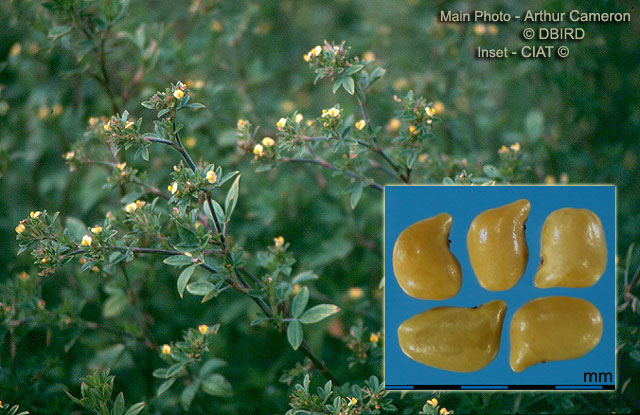
Stylo is Bushwala's market name for Stylosanthes, a perennial pasture legume widely used across the warm tropics and subtropics as both a grazed pasture component and a cut-and-carry fodder. It fixes its own nitrogen, tolerates low-fertility and low-phosphorus soils, and is commonly oversown into existing grass pasture to lift protein content and stocking rates.
سٹائیلو بش والا کا مارکیٹ نام ہے سٹائیلوسینتھیس کا، ایک بارہماسی چراگاہی لیگیوم جو گرم اشنکٹبندیی اور نیم اشنکٹبندیی علاقوں میں چراگاہ اور کٹائی دونوں کے لیے استعمال ہوتی ہے۔
Propagated from seed. Scarify or lightly abrade hard seed before sowing to improve germination; a rhizobium seed inoculant (where available) improves early nitrogen fixation.
بیج سے تیار کیا جاتا ہے۔ بونے سے پہلے سخت بیج کو رگڑیں تاکہ اگاؤ بہتر ہو۔
Oversown into existing pasture: 4–6 kg seed/acre. Pure stand block planting: rows 40–50cm apart, thinned to approx. 15–20 plants/m².
موجودہ چراگاہ میں: 4 سے 6 کلوگرام بیج فی ایکڑ۔
As a grazed pasture legume or cut-and-carry fodder, an established acre can meaningfully lift the protein intake of a mixed grazing herd — commonly used to support 10–15 goats/sheep or 3–4 cattle/buffalo per acre in rotational systems, alongside a grass base. General estimate — actual capacity depends heavily on companion grass and grazing management.
بطور چراگاہی لیگیوم یا کٹائی کا چارہ، ایک ایکڑ مخلوط ریوڑ کی پروٹین مقدار کو نمایاں طور پر بہتر بنا سکتا ہے۔
Usable for light grazing/cutting within 4–6 months of sowing; full pasture contribution from the second season. Productive pasture life of roughly 3–6 years before re-sowing is typically needed.
بونے کے 4 سے 6 ماہ میں ہلکی چرائی کے قابل؛ دوسرے موسم میں مکمل کردار۔
From sowing the seed through to when the plant starts producing, here's what to expect at each stage.بیج بونے سے لے کر پیداوار شروع ہونے تک، ہر مرحلے میں کیا توقع رکھیں۔
Scarify hard seed, then broadcast or row-sow 1–2cm deep into prepared, weed-free ground after monsoon rain or with irrigation.
سخت بیج کو رگڑیں، پھر مون سون کی بارش کے بعد یا آبپاشی کے ساتھ بوئیں۔
Germinates in 7–14 days in warm, moist soil. Reaches grazing/cutting height (40–60cm) within 4–6 months.
گرم، نم مٹی میں 7 سے 14 دن میں اگتا ہے۔
Normally direct-sown rather than transplanted; oversowing into existing pasture avoids the need for nursery raising.
عام طور پر براہ راست بویا جاتا ہے، منتقلی کی ضرورت نہیں۔
Prefers normal, non-saline soils, including low-fertility ground. Its deep taproot supports drought tolerance once established, but regular moisture is needed through establishment — irrigated or reliably monsoon-fed pasture works best.
عام، غیر کھاری زمین کو ترجیح دیتا ہے۔ قیام کے دوران باقاعدہ نمی درکار ہے۔
Minimal fertilizer needed — nitrogen-fixing and tolerant of low-phosphorus soils. A light phosphorus starter dose at sowing improves early nodulation.
کم سے کم کھاد درکار ہے۔ بوقت بوائی فاسفورس کی ہلکی ابتدائی خوراک مفید ہے۔
Well suited to rotational grazing alongside a grass base, and to cut-and-carry for stall-fed animals. Allow adequate rest between grazing passes — continuous heavy grazing shortens stand life.
گھاس کی بنیاد کے ساتھ گردشی چرائی اور کٹائی دونوں کے لیے موزوں۔
Flowers and sets seed within the first season, typically from 3–4 months after sowing, with reliable annual seeding thereafter for 3–6 years.
پہلے موسم میں، تقریباً 3 سے 4 ماہ بعد پھول اور بیج بننا شروع ہوتا ہے۔
Stylo refers to Stylosanthes forage legumes used for pasture and livestock feed in suitable warm environments.
The scientific name of Stylo is Stylosanthes spp..
Stylo is a perennial species.
Yes — Stylo is suited to Pakistan's drier and, where relevant, saline growing conditions. See the regional suitability table on this page for specifics.
Stylo is rated Suitable for: Punjab, Sindh. Other zones may be Conditional or Not Recommended — see the full regional suitability table on this page.
Based on its soil profile (Adapts to a wide range of normal (non-saline) soils, including low-fertility and low-phosphorus ground; not suited to saline sites.), check the soil notes above for sandy-soil suitability.
Salinity tolerance is rated Low. It is not a first choice for genuinely saline ground — consider a higher-salinity-tolerance species instead.
Not documented as salt-tolerant — suited to normal, non-saline pasture and cropland soils rather than saline reclamation sites.
Typically suited to 500–1000mm/year or irrigated pasture systems; its deep taproot (reported to 4m in some Stylosanthes species) helps it handle dry spells once established. Irrigation need is rated Moderate.
Oversown into existing pasture: 4–6 kg seed/acre. Pure stand block planting: rows 40–50cm apart, thinned to approx. 15–20 plants/m².
As a grazed pasture legume or cut-and-carry fodder, an established acre can meaningfully lift the protein intake of a mixed grazing herd — commonly used to support 10–15 goats/sheep or 3–4 cattle/buffalo per acre in rotational systems, alongside a grass base. General estimate — actual capacity depends heavily on companion grass and grazing management.
Published values vary widely by species and cutting stage — commonly cited from roughly 6% (mature, dry-season) up to 20–24% crude protein (DM) in young growth. Get your own batch tested rather than quoting a single figure.
Yes.
Yes.
Yes.
Yes — it is a nitrogen-fixing species that can improve soil fertility over time.
Scarify hard seed, then broadcast or row-sow 1–2cm deep into prepared, weed-free ground after monsoon rain or with irrigation.
Propagated from seed. Scarify or lightly abrade hard seed before sowing to improve germination; a rhizobium seed inoculant (where available) improves early nitrogen fixation.
Usable for light grazing/cutting within 4–6 months of sowing; full pasture contribution from the second season. Productive pasture life of roughly 3–6 years before re-sowing is typically needed.
3–6 productive years as a pasture stand
Oversown into existing pasture: 4–6 kg seed/acre. Pure stand block planting: rows 40–50cm apart, thinned to approx. 15–20 plants/m².
Not reliably — drought tolerance is rated Moderate.
Drought tolerance is rated Moderate.
Frost tolerance is rated Low.
Primarily: Fodder, Soil reclamation.