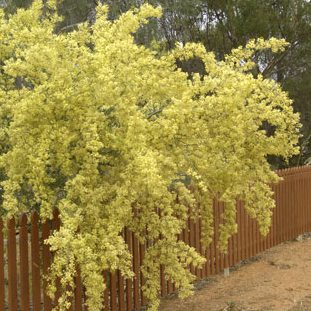
What is Australian Kanta Keekar?
Australian Kanta Keekar is Acacia victoriae, a thorny Australian acacia suited to hardy dryland planting and livestock browse systems.
What is the scientific name of Australian Kanta Keekar?
The scientific name of Australian Kanta Keekar is Acacia victoriae.
Is Australian Kanta Keekar perennial or annual?
Australian Kanta Keekar is a perennial species.
Is Australian Kanta Keekar suitable for Pakistan?
Yes — Australian Kanta Keekar is suited to Pakistan's drier and, where relevant, saline growing conditions. See the regional suitability table on this page for specifics.
Which areas of Pakistan are suitable for Australian Kanta Keekar?
Australian Kanta Keekar is rated Suitable for: Thal, Sindh, Balochistan. Other zones may be Conditional or Not Recommended — see the full regional suitability table on this page.
Can Australian Kanta Keekar grow in sandy soil?
Based on its soil profile (Sandy to saline-tolerant soils), sandy soil is generally suitable.
Can Australian Kanta Keekar grow in saline soil?
Salinity tolerance is rated Moderate. It is not a first choice for genuinely saline ground — consider a higher-salinity-tolerance species instead.
What TDS/EC water can Australian Kanta Keekar tolerate?
Moderate salinity tolerance; performs well in genuinely arid, low-rainfall zones with saline-tending groundwater.
How much water does Australian Kanta Keekar require?
Native to arid inland Australia — suited to roughly 200–500mm/year, tolerating extended dry spells once rooted. Irrigation need is rated Low.
How many plants should I grow per acre?
Boundary/windbreak line: 3–4m spacing (approx. 350–450 plants/acre if planted as a full block). Most commonly planted as field-boundary rows rather than dense blocks.
How much fodder can Australian Kanta Keekar produce per acre?
Primarily a dry-season fodder reserve rather than a daily feed source — pods and foliage are browsed opportunistically. A boundary planting of 100 mature plants can provide meaningful drought-season supplementary browse for a mixed herd of 15–20 goats/sheep.
What is the crude protein content of Australian Kanta Keekar?
Foliage protein for dryland browse acacias is commonly cited in the 12–18% crude protein (DM) range — treat as an indicative range pending your own lab data.
Is Australian Kanta Keekar suitable for goats?
Yes.
Is Australian Kanta Keekar suitable for sheep?
Yes.
Is Australian Kanta Keekar suitable for cattle?
Australian Kanta Keekar is not typically used as primary cattle fodder.
Does Australian Kanta Keekar fix nitrogen?
Yes — it is a nitrogen-fixing species that can improve soil fertility over time.
How do you germinate Australian Kanta Keekar seeds?
Scarify seed coat with sandpaper or a brief hot-water soak, then sow 1–2cm deep in nursery bags or directly at final position in Spring or Autumn.
Does Australian Kanta Keekar need seed treatment?
Propagated from seed. Requires scarification (nicking the seed coat or a brief hot-water soak) — the seed coat is hard and germination is poor without pre-treatment.
How long does Australian Kanta Keekar take to establish?
Slow to establish — first useful browse/pods from year 3–4; becomes a reliable dry-season fodder reserve from year 5 onward. Long-lived, productive for 20+ years.
How long does Australian Kanta Keekar live?
20+ years
What is the best planting density for Australian Kanta Keekar?
Boundary/windbreak line: 3–4m spacing (approx. 350–450 plants/acre if planted as a full block). Most commonly planted as field-boundary rows rather than dense blocks.
Can Australian Kanta Keekar grow without irrigation?
Yes, once established — drought tolerance is rated Very High.
Is Australian Kanta Keekar drought tolerant?
Drought tolerance is rated Very High.
Is Australian Kanta Keekar frost tolerant?
Frost tolerance is rated Moderate.
What is Australian Kanta Keekar mainly used for?
Primarily: Fodder, Windbreak.