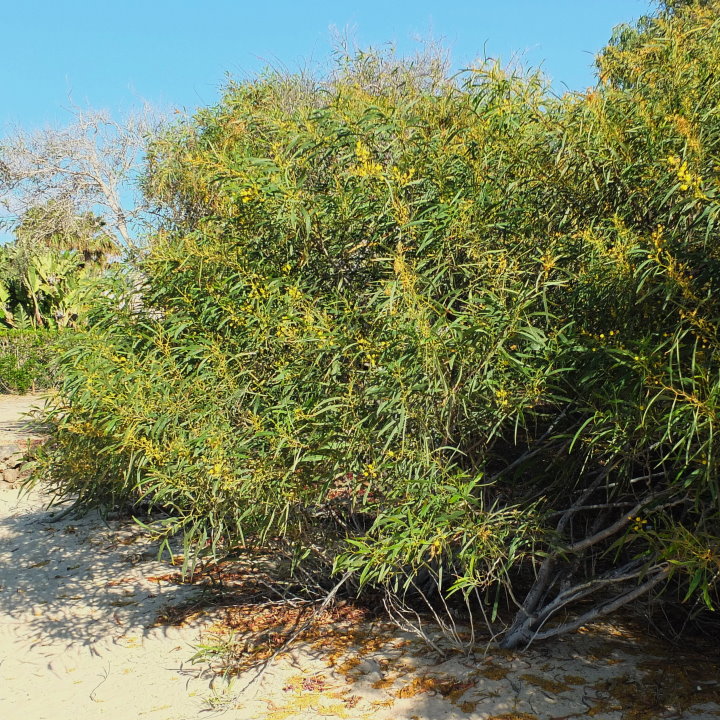
Acacia Saligna — photo 1
Fodderچارہ
Fodder seedچارہ بیج

Australian Neela Keekar

Acacia saligna Also known as Acacia saligna / Golden Wreath Wattleآسٹریلین نیلا ککر
Water needپانی کی ضرورتlow
Sunدھوپfull
SoilمٹیSandy, saline-tolerant, stabilises dunes
Growth timeنشوونما کا وقت2–3 years
Planting seasonبونے کا موسمAutumn or Spring sowing
Purposeمقصدfodder, windbreak, soil-stabilisation
Scarifiedرگڑا ہوا Contact usہم سے رابطہ کریں
Germination Checkedاگاؤ کی جانچ On requestدرخواست پر
Germination Rateاگاؤ کی شرح On requestدرخواست پر
Rs 1,800 / 1g/ 1 گرام Minimum 50 seeds per 1g unitکم از کم 50 بیج فی 1 گرام یونٹ

Quantity is in units of 1gمقدار 1 گرام کے یونٹس میں ہے

Estimated totalتخمینی کل Rs 1800

Ordering in larger quantity? بڑی مقدار میں آرڈر کرنا ہے؟ Contact us for bulk pricingبلک قیمت کے لیے رابطہ کریں

Species Profileپودے کا پروفائل

Lifecycleلائف سائیکلPerennialبارہماسی
Plant Typeپودے کی قسمFast-growing shrub / small treeتیزی سے بڑھنے والی جھاڑی / چھوٹا درخت
Nitrogen Fixingنائٹروجن جمع کرنے والاYesجی ہاں
Drought Toleranceخشک سالی برداشتHighزیادہ
Salinity Toleranceکھارے پن کی برداشتHighزیادہ
Waterlogging Toleranceجل تھل برداشتLowکم
Frost Toleranceٹھنڈ برداشتLowکم
Irrigation Needآبپاشی کی ضرورتLowکم
Goat Fodderبکری کا چارہYesجی ہاں
Sheep Fodderبھیڑ کا چارہYesجی ہاں
Cattle / Buffalo Fodderگائے / بھینس کا چارہNoنہیں
Lifespanعمر15–20 years (relatively fast-cycling)15 سے 20 سال

Crude Protein Contentخام پروٹین کی مقدار

Foliage protein commonly cited around 12–16% crude protein (DM) for this species — treat as indicative pending your own feed test.

پتوں میں پروٹین عام طور پر 12 سے 16 فیصد کے قریب بتائی جاتی ہے۔

Rainfall / Water Needبارش / پانی کی ضرورت

Adapts across roughly 300–700mm/year; naturally a coastal/Mediterranean-climate species that has proven adaptable to arid and coastal sites elsewhere.

تقریباً 300 سے 700 ملی میٹر سالانہ بارش میں ڈھل جاتا ہے۔

Water TDS / EC Toleranceپانی کے ٹی ڈی ایس / ای سی کی برداشت

Good salt tolerance — well suited to coastal and moderately saline sandy soils.

کھارے پن کی اچھی برداشت — ساحلی اور کھاری ریتیلی زمین کے لیے موزوں۔

Regional Suitability Across Pakistanپاکستان بھر میں علاقائی موزونیت

Regionعلاقہ Suitabilityموزونیت
Northern Pakistanشمالی پاکستان Not Recommendedتجویز نہیں
Punjabپنجاب Suitableموزوں
Thalتھل Suitableموزوں
Sindhسندھ Suitableموزوں
Balochistanبلوچستان Suitableموزوں
KP (Khyber Pakhtunkhwa)کے پی (خیبر پختونخوا) Not Recommendedتجویز نہیں
AJK / Gilgit-Baltistanآزاد کشمیر / گلگت بلتستان Not Recommendedتجویز نہیں

Description & usesتفصیل اور استعمال

A fast-establishing coastal wattle from the Australian bush, valued for stabilising sandy and saline ground while providing supplementary browse fodder for livestock.

آسٹریلوی بش کی ایک تیزی سے قائم ہونے والی ساحلی اکیشیا، جو ریتیلی اور کھاری زمین کو مستحکم کرنے کے ساتھ ساتھ مویشیوں کے لیے اضافی چارہ بھی فراہم کرتی ہے۔

Propagation Methodافزائش کا طریقہ

Propagated from seed. Scarify or hot-water soak before sowing — germinates readily once the seed coat is broken.

بیج سے تیار کیا جاتا ہے۔ بونے سے پہلے رگڑیں یا گرم پانی میں بھگوئیں۔

Planting Densityکاشت کی کثافت

Dune/bund stabilisation planting: 1.5–2m spacing (approx. 1,000–1,300 plants/acre). Wider spacing (3m) if grown mainly for windbreak/fodder rather than ground cover.

ٹیلوں کے استحکام کے لیے: 1.5 سے 2 میٹر کا فاصلہ۔

Livestock Carrying Capacityمویشیوں کی گنجائش

A supplementary browse species rather than a primary fodder crop — an established stand of 1 acre can provide part-browse for around 8–12 goats or sheep, alongside its main role in stabilising sandy or saline ground.

یہ ایک اضافی چارہ ہے، بنیادی نہیں۔ ایک ایکڑ تقریباً 8 سے 12 بکریوں کو جزوی چارہ دے سکتا ہے۔

Time to Productionپیداوار کا وقت

Fast-establishing — useful ground cover and light browse within 1–2 years; full canopy and fodder value by year 3.

1 سے 2 سال میں مفید احاطہ اور ہلکا چارہ ملتا ہے۔

Growing & Care — Stage by Stageکاشت اور دیکھ بھال — مرحلہ وار

From sowing the seed through to when the plant starts producing, here's what to expect at each stage.بیج بونے سے لے کر پیداوار شروع ہونے تک، ہر مرحلے میں کیا توقع رکھیں۔

Seed Sowingبیج بونا

Scarify seed and soak in hot water, cool overnight, then sow 1–2cm deep in nursery bags for later transplanting, or direct-sow on prepared dune/bund lines.

بیج کو رگڑیں اور گرم پانی میں بھگوئیں، پھر بوئیں۔

Germination & Growing Monthsاگاؤ اور نشوونما کے مہینے

Germinates in 7–14 days. Fast early growth compared to other acacias — reaches transplant size (25–35cm) in 8–10 weeks.

7 سے 14 دن میں اگتا ہے، تیز ابتدائی نشوونما۔

Transplantationمنتقلی

Transplant at the start of the rainy season for best dune/sandy-ground establishment; water in immediately after planting.

بارشی موسم کے آغاز پر منتقل کریں۔

Soil & Water Requirementمٹی اور پانی کی ضرورت

Thrives in sandy, saline, coastal soils; tolerates salt spray and wind. Needs regular watering for the first season on very sandy sites; largely self-sufficient afterward.

ریتیلی، کھاری اور ساحلی زمین میں پھلتا پھولتا ہے۔

Fertilizer Requirementکھاد کی ضرورت

No routine fertilizer needed. Nitrogen-fixing legume that helps rebuild fertility in degraded sandy or saline ground.

معمول کی کھاد درکار نہیں۔

Cutting, Grazing & Carry Methodکٹائی، چرائی اور ڈھلائی کا طریقہ

Light browsing by goats/sheep once established; can be cut-and-carried but regrowth is slower than tagasaste or desmanthus, so use lightly rather than as a primary cut crop.

جڑ پکڑنے کے بعد ہلکی چرائی؛ بطور بنیادی کٹائی فصل استعمال نہ کریں۔

When It Starts Producing Seedبیج پیدا کرنے کا وقت

Flowers (bright golden) and sets seed from year 2, with reliable annual seed production from year 3 onward.

سال 2 سے پھول اور بیج بننا شروع ہوتا ہے۔

Common Questionsعام سوالات

Frequently Asked Questions about Australian Neela KeekarAustralian Neela Keekar کے بارے میں عام سوالات

What is Australian Neela Keekar?

Australian Neela Keekar is Acacia saligna, a fast-growing Australian acacia used for dryland planting, fodder, biomass, windbreaks and soil improvement.

What is the scientific name of Australian Neela Keekar?

The scientific name of Australian Neela Keekar is Acacia saligna.

Is Australian Neela Keekar perennial or annual?

Australian Neela Keekar is a perennial species.

Is Australian Neela Keekar suitable for Pakistan?

Yes — Australian Neela Keekar is suited to Pakistan's drier and, where relevant, saline growing conditions. See the regional suitability table on this page for specifics.

Which areas of Pakistan are suitable for Australian Neela Keekar?

Australian Neela Keekar is rated Suitable for: Sindh. Other zones may be Conditional or Not Recommended — see the full regional suitability table on this page.

Can Australian Neela Keekar grow in sandy soil?

Based on its soil profile (Sandy, saline-tolerant, stabilises dunes), sandy soil is generally suitable.

Can Australian Neela Keekar grow in saline soil?

Salinity tolerance is rated High. This is one of the more saline-tolerant options in the catalog.

What TDS/EC water can Australian Neela Keekar tolerate?

Good salt tolerance — well suited to coastal and moderately saline sandy soils.

How much water does Australian Neela Keekar require?

Adapts across roughly 300–700mm/year; naturally a coastal/Mediterranean-climate species that has proven adaptable to arid and coastal sites elsewhere. Irrigation need is rated Low.

How many plants should I grow per acre?

Dune/bund stabilisation planting: 1.5–2m spacing (approx. 1,000–1,300 plants/acre). Wider spacing (3m) if grown mainly for windbreak/fodder rather than ground cover.

How much fodder can Australian Neela Keekar produce per acre?

A supplementary browse species rather than a primary fodder crop — an established stand of 1 acre can provide part-browse for around 8–12 goats or sheep, alongside its main role in stabilising sandy or saline ground.

What is the crude protein content of Australian Neela Keekar?

Foliage protein commonly cited around 12–16% crude protein (DM) for this species — treat as indicative pending your own feed test.

Is Australian Neela Keekar suitable for goats?

Yes.

Is Australian Neela Keekar suitable for sheep?

Yes.

Is Australian Neela Keekar suitable for cattle?

Australian Neela Keekar is not typically used as primary cattle fodder.

Does Australian Neela Keekar fix nitrogen?

Yes — it is a nitrogen-fixing species that can improve soil fertility over time.

How do you germinate Australian Neela Keekar seeds?

Scarify seed and soak in hot water, cool overnight, then sow 1–2cm deep in nursery bags for later transplanting, or direct-sow on prepared dune/bund lines.

Does Australian Neela Keekar need seed treatment?

Propagated from seed. Scarify or hot-water soak before sowing — germinates readily once the seed coat is broken.

How long does Australian Neela Keekar take to establish?

Fast-establishing — useful ground cover and light browse within 1–2 years; full canopy and fodder value by year 3.

How long does Australian Neela Keekar live?

15–20 years (relatively fast-cycling)

What is the best planting density for Australian Neela Keekar?

Dune/bund stabilisation planting: 1.5–2m spacing (approx. 1,000–1,300 plants/acre). Wider spacing (3m) if grown mainly for windbreak/fodder rather than ground cover.

Can Australian Neela Keekar grow without irrigation?

Yes, once established — drought tolerance is rated High.

Is Australian Neela Keekar drought tolerant?

Drought tolerance is rated High.

Is Australian Neela Keekar frost tolerant?

Frost tolerance is rated Low.

What is Australian Neela Keekar mainly used for?

Primarily: Fodder, Windbreak, Soil stabilisation.
🌿