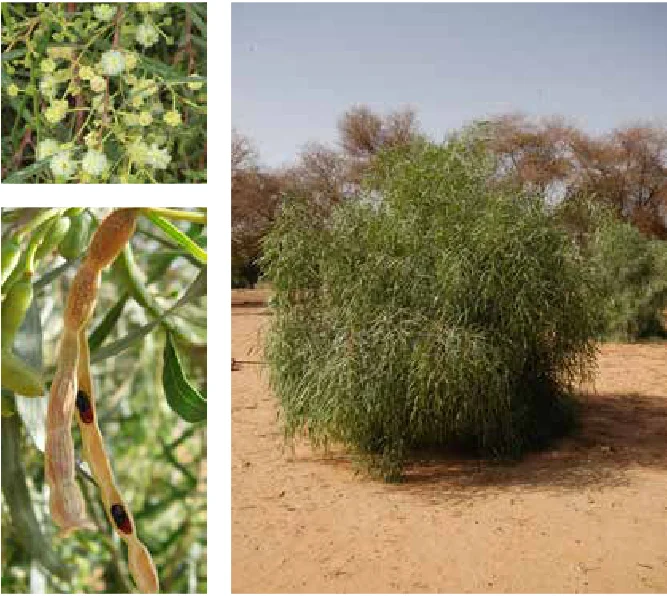
What is Australian Saline Keekar?
Australian Saline Keekar is Acacia ampliceps, also known as Salt Wattle, a highly salt-tolerant Australian acacia used for saline land reclamation, windbreaks and supplementary fodder.
What is the scientific name of Australian Saline Keekar?
The scientific name of Australian Saline Keekar is Acacia ampliceps.
Is Australian Saline Keekar perennial or annual?
Australian Saline Keekar is a perennial species.
Is Australian Saline Keekar suitable for Pakistan?
Yes — Australian Saline Keekar is suited to Pakistan's drier and, where relevant, saline growing conditions. See the regional suitability table on this page for specifics.
Which areas of Pakistan are suitable for Australian Saline Keekar?
Australian Saline Keekar is rated Suitable for: Sindh. Other zones may be Conditional or Not Recommended — see the full regional suitability table on this page.
Can Australian Saline Keekar grow in sandy soil?
Based on its soil profile (Highly saline, sodic and alkaline soils; shallow-rooted, performs best where roots can reach a shallow saline water table. Intolerant of acidic soils.), check the soil notes above for sandy-soil suitability.
Can Australian Saline Keekar grow in saline soil?
Salinity tolerance is rated Very High. This is one of the more saline-tolerant options in the catalog.
What TDS/EC water can Australian Saline Keekar tolerate?
Among the most salt-tolerant species in this catalog — published research describes it thriving in highly saline, sodic and alkaline soils (it does not tolerate acidic soils). Has been specifically field-tested for salt-affected land reclamation in southern Pakistan.
How much water does Australian Saline Keekar require?
Performs best with access to a shallow, brackish water table rather than relying purely on rainfall — native to arid northwestern Australia and specifically trialled on salt-affected land in southern Pakistan (Sindh). Irrigation need is rated Moderate.
How many plants should I grow per acre?
Windbreak/boundary row: 3–4m spacing. Block reclamation planting on saline ground: 2×2.5m spacing (approx. 650–800 plants/acre).
How much fodder can Australian Saline Keekar produce per acre?
Published trials describe fodder value for both cattle and sheep, used as a supplementary browse rather than a primary feed. An established acre on reclaimed saline ground can provide part-browse for roughly 10–15 goats/sheep or 3–4 cattle/buffalo during dry-season feed gaps. General estimate — verify against your own stocking conditions.
What is the crude protein content of Australian Saline Keekar?
Published trials report foliage crude protein around 10–17% (DM) with digestibility of roughly 40–55% — suitable as supplemental rather than sole fodder. Confirm with your own feed test.
Is Australian Saline Keekar suitable for goats?
Yes.
Is Australian Saline Keekar suitable for sheep?
Yes.
Is Australian Saline Keekar suitable for cattle?
Yes.
Does Australian Saline Keekar fix nitrogen?
Yes — it is a nitrogen-fixing species that can improve soil fertility over time.
How do you germinate Australian Saline Keekar seeds?
Scarify seed coat (sandpaper or brief hot-water soak), then direct-sow 1–2cm deep on prepared saline ground, or into nursery bags for difficult sites.
Does Australian Saline Keekar need seed treatment?
Propagated from seed. Establishes well by direct seeding once scarified (nick the seed coat or a brief hot-water soak) — no special nursery requirement, though nursery-raising improves survival on very difficult sites.
How long does Australian Saline Keekar take to establish?
Useful browse/windbreak height from year 2–3; becomes a reliable saline-land fodder and reclamation asset from year 4–5. Relatively short-lived but coppices and root-suckers readily for repeat use.
How long does Australian Saline Keekar live?
Moderate-fast growing but relatively short-lived; coppices and root-suckers readily for repeat use
What is the best planting density for Australian Saline Keekar?
Windbreak/boundary row: 3–4m spacing. Block reclamation planting on saline ground: 2×2.5m spacing (approx. 650–800 plants/acre).
Can Australian Saline Keekar grow without irrigation?
Not reliably — drought tolerance is rated Moderate.
Is Australian Saline Keekar drought tolerant?
Drought tolerance is rated Moderate.
Is Australian Saline Keekar frost tolerant?
Frost tolerance is rated Moderate.
What is Australian Saline Keekar mainly used for?
Primarily: Fodder, Windbreak, Soil reclamation.